


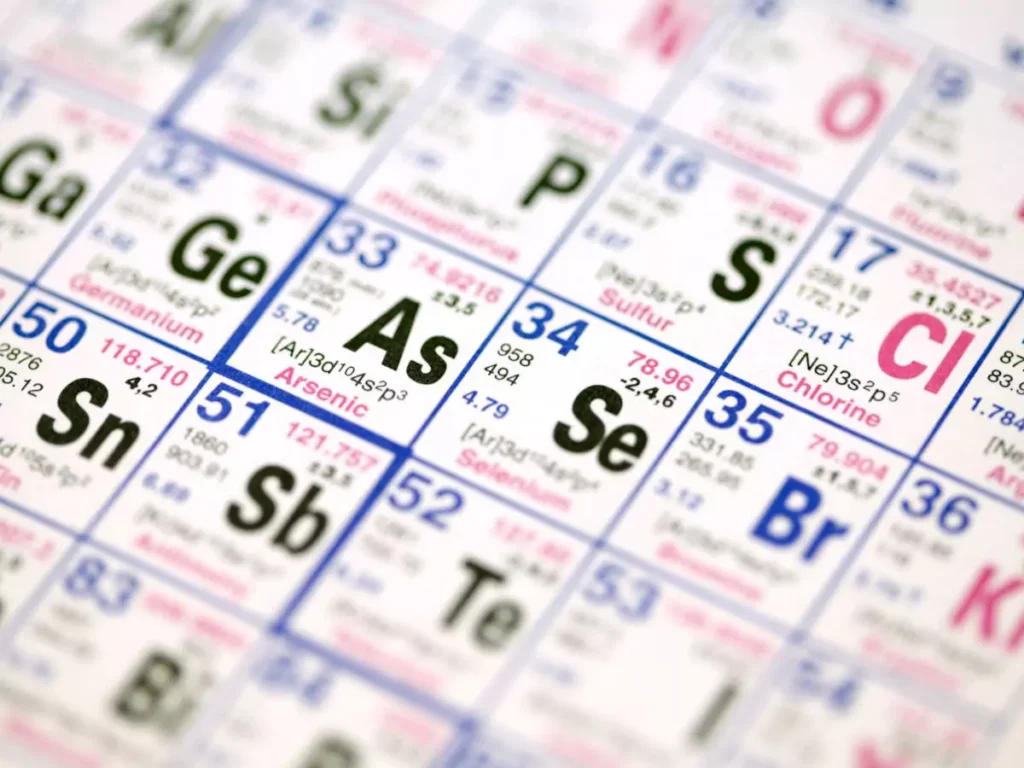
KEAM Chemistry Syllabus: KEAM syllabus is released by CEE Kerala in their official brochure. The KEAM Syllabus 2022 consists for physics, chemistry and physics. This page gives the details of KEAM Chemistry Syllabus 2022 which consists of states of matter, atomic structure, periodic properties etc.This page details the KEAM 2022 Chemistry Syllabus.
UNIT 1: BASIC CONCEPTS AND ATOMIC STRUCTURE
Laws of Chemical Combination : Law of conservation of mass. Law of definite proportion. Law of multiple proportions. Gay-Lussacs law of combining volumes. Daltons atomic theory. Mole concept. Atomic,molecular and molar masses. Chemical equations. Balancing and calculation based on chemical equations.
Atomic Structure : Fundamental particles. Rutherford model of atom. Nature of electromagnetic radiation. Emission spectrum of hydrogen atom. Bohr model of hydrogen atom. Drawbacks of Bohr model.Dual nature of matter and radiation. de Broglie relation. Uncertainty principle. Wave function (mention only). Atomic orbitals and their shapes (s, p and d orbitals only). Quantum numbers. Electronic configurations of elements. Paulis exclusion principle. Hunds rule. Aufbau principle.
UNIT 2 : BONDING AND MOLECULAR STRUCTURE
Kossel and Lewis approach of bonding. Ionic bond, covalent character of ionic bond, Lattice energy. Born-Haber cycle. Covalent bond. Lewis structure of covalent bond. Concept of orbital overlap. VSEPR theory and geometry of molecules. Polarity of covalent bond. Valence bond theory and hybridization (sp,sp2, sp3, dsp2, d2sp3 and sp3d2). Resonance. Molecular orbital method. Bond order. Molecular orbital diagrams of homodiatomic molecules. Bond strength and magnetic behaviour. Hydrogen bond. Coordinate bond. Metallic bond.
UNIT 3 : STATES OF MATTER
Gaseous State: Boyles law. Charles law. Avogadros hypothesis. Grahams law of diffusion. Absolute scale of temperature. Ideal gas equation. Gas constant and its values. Daltons law of partial pressure. Aqueous tension. Kinetic theory of gases. Deviation of real gases from ideal behaviour. Inter molecular interaction, van der Waals equation. Liquefaction of gases. Critical temperature.
Liquid State: Properties of liquids. Vapour pressure and boiling point. Surface tension. Viscosity.
Solid State: Types of solids (ionic, covalent and molecular). Space lattice an unit cells. Cubic crystal systems. Close packing. Different voids (tetrahedral and octahedral only). Density calculations. Point defects (Frenkel and Schottky). Electrical properties of solids. Conductors, semiconductors and insulators. Piezoelectric and pyroelectric crystals. Magnetic properties of solids. Diamagnetic, paramagnetic, ferromagnetic, antiferromagnetic and ferrimagnetic substances.
UNIT 4 : PERIODIC PROPERTIES OF ELEMENTS AND HYDROGEN
Classification of Elements: Mendeleevs periodic table. Atomic number and modern periodic law. Long form of periodic table. Electronic configurations of elements and their position in the periodic table. Classification into s-, p-, d- and f-block elements.
Periodic Properties: Ionization energy, electron affinity, atomic radii, valence and electro negativity.
Hydrogen: Position in the periodic table, occurrence, isolation, preparation (including commercial), properties, reactions and uses. Isotopes of hydrogen. Hydrides: Molecular, saline and interstitial hydrides.
Water: Structure of water molecule and its aggregates. Physical and chemical properties of water. Hard and soft water. Removal of hardness. Preparation and uses of heavy water: Liquid hydrogen as fuel.
UNIT 5 : S-BLOCK ELEMENTS AND PRINCIPLES OF METALLURGY
Alkali Metals: Occurrence, electronic configuration, trends in atomic and physical properties (ionization energy, atomic radii and ionic radii), electrode potential, and reactions with oxygen, hydrogen, halogens and liquid ammonia. Oxides, hydroxides and halides.
Alkaline Earth Metals: Occurrence, electronic configuration, trends in atomic and physical properties, electrode potential, and reactions with oxygen, hydrogen and halogens. Oxides, hydroxides, halides and sulphides. Anomalous properties of lithium and beryllium.
Compounds of S-Block Elements: Large scale preparation of NaOH and Na2CO3, their properties and uses. Preparation and properties of CaO, Ca(OH)2, Plaster of Paris and MgSO4. Industrial uses of lime, limestone and cement.
Principles of Metallurgy: Occurrence of metals. Concentration of ores. General principles of extraction of metals from ore. Thermodynamic and electro chemical principles of metallurgy. Refining of metals. Extraction of zinc, aluminium, iron and copper.
UNIT 6: P-BLOCK ELEMENTS
General Characteristics of P-Block Elements: atomic and physical properties. Oxidation states. Trends in chemical reactivity of Groups 13, 14, 15, 16 and 17 elements.
Boron: Occurrence, isolation, physical and chemical properties. Borax and boric acid. Boron hydrides. Structure of diborane. Uses of boron and its compounds.
Carbon: Allotropes, properties, Oxides of Carbon.
Nitrogen: Terrestrial abundance and distribution, isolation, properties and chemical reactivity.
Ammonia: Haber process of manufacture, properties and uses.
Nitric Acid: Ostwald process of manufacture and important uses.
Oxides of Nitrogen: Preparation and structures (skeletal only).
Oxygen: Terrestrial abundance, isolation, properties and chemical reactivity.
Oxides: Acidic, basic and amphoteric oxides. Preparation, structure, properties and uses of ozone and hydrogen peroxide.
Silica: Different forms and uses. Structures of silicates. Silicones, Zeolites, Uses of Silicon Tetra Chloride.
Phosphorus: Production, allotropes and phosphine. Preparation and structures of PCl3 , PCl5, oxyacids of phosphorus. Comparison of halides and hydrides of Group 15 elements.
Sulphur: Production, allotropes, oxides and halides, Oxoacids of Sulphur (structure only).
Sulphuric Acid: Manufacture, properties and uses. Comparison of oxides, halides and hydrides of Group 17 elements, Oxoacids of halogens (structure only), hydrides and oxides of chlorine. Interhalogen compounds.
Group 18 Elements: Occurrence, isolation, atomic and physical properties, uses.
Compounds of Xenon: Preparation of fluorides and oxides, and their reactions with water.
UNIT 7: D-BLOCK AND F-BLOCK ELEMENTS
D-Block Elements: Electronic configuration and general characteristics. Metallic properties, ionization energy, electrode potential, oxidation states, ionic radii, catalytic properties, coloured ions, complex formation, magnetic properties, interstitial compounds and alloys. Preparation and properties of KMnO4 ,K2Cr2O7 .
F-Block Elements: Lanthanides: Occurrence, electronic configuration and oxidation states. Lanthanide
contraction. Uses.
Actinides: Occurrence, electronic configuration and comparison with lanthanides.
UNIT 8: THERMODYNAMICS
System and Surrounding: Types of systems. Types of processes. Intensive and extensive properties. State functions and path functions. Reversible and irreversible processes.
First Law of Thermodynamics: Internal energy and enthalpy. Application of first law of thermodynamics. Enthalpy changes during phase transition. Enthalpy changes in chemical reactions. Standard enthalpy of formation. Hesss law of constant heat summation and numerical problems. Heat capacity and specific heat.
Second law of Thermodynamics: Entropy and Gibbs free energy. Free energy change and chemical equilibrium. Criteria for spontaneity.
UNIT 9: CHEMICAL EQUILIBRIUM
Physical and Chemical Equilibria: Dynamic nature of equilibrium. Equilibria involving physical changes (solid-liquid, liquid-gas, dissolution of solids in liquids and dissolution of gases in liquids). General characteristics of equilibria involving physical processes.
Equilibria Involving Chemical Systems: Law of chemical equilibrium. Magnitude of equilibrium constant. Numerical problems. Effect of changing conditions of systems at equilibrium (changes of concentration, temperature and pressure). Effect of catalyst. The Le Chatelier principle and its applications. Relationship between Kp and Kc. Ionic equilibrium. Ionization of weak and strong electrolytes.
Concepts of Acids and Bases: Those of Arrhenius, Bronsted-Lowry and Lewis. Acid-base equilibrium. Ionization of water. pH scale. Salt hydrolysis. Solubility product. Common ion effect. Buffer action and buffer solutions.
UNIT 10: SOLUTIONS
Types of Solutions: Different concentration terms (normality, molarity, molality, mole fraction and mass percentage). Solubility of gases and solids. Vapour pressure of solutions and Raoults law. Deviation from Raoults law. Colligative properties: Lowering of vapour pressure, elevation in boiling point, depression in freezing point and osmotic pressure. Ideal and non-ideal solutions. Determination of molecular mass. Abnormal molecular mass. The vant Hoff factor and related numerical problems.
UNIT 11: REDOX REACTIONS AND ELECTROCHEMISTRY
Oxidation and Reduction: Electron transfer concept. Oxidation number. Balancing equations of redox reactions: Oxidation number method and ion electron method (half reaction method).
Faradays Laws of Electrolysis: Quantitative aspects. Electrolytic conduction. Conductance. Molar conductance. Kohlrauschs law and its applications. Electrode potential and electromotive force (e.m.f.). Reference electrode (SHE only). Electrolytic and Galvanic cells. Daniel cell. The Nernst equation. Free energy and e.m.f. Primary and secondary cells. Fuel cell (H2-O2 only).
Corrosion and its Prevention: Electrochemical theory of rusting of iron. Methods of prevention of corrosion. Galvanization and cathodic protection.
UNIT 12: CHEMICAL KINETICS
Rate of reaction. Average and instantaneous rates. Rate expressions. Rate constant. Rate law. Order and molecularity. Integrated rate law expressions for zero and first order reactions and their derivations. Units of rate constant. Half life period. Temperature dependence of rate constant. Arrhenius equation. Activation energy, Collision Theory (Elementary theory) and related numerical problems. Elementary and complex reactions with examples.
UNIT 13: SURFACE CHEMISTRY
Adsorption: Physical and chemical adsorption. Factors affecting adsorption. Effect of pressure.Freundlisch adsorption isotherm. Catalysis. Enzymes. Zeolites.
Colloids: Colloids and suspensions.Dispersion medium and dispersed phase. Types of colloids: Lyophobic, lyophilic, multimolecular,macromolecular and associated colloids. Preparation, properties and protection of colloids. Gold number.Hardy Schulze rule. Emulsions.
UNIT 14: COORDINATION COMPOUNDS AND ORGANOMETALLICS
Ligand. Coordination number. IUPAC nomenclature of coordination compounds mononuclear, Isomerism in coordination compounds. Geometrical, optical and structural isomerism. Bonding in coordination compounds. Werners coordination theory. Valence bond approach. Hybridization and geometry.Magnetic properties of octahedral, tetrahedral and square planar complexes. Introduction to crystal field theory. Splitting of d orbitals in octahedral and tetrahedral fields (qualitative only). Importance of coordination compounds in qualitative analysis and biological systems such as chlorophyll, hemoglobin and vitamin B12 (structures not included).
UNIT 15: BASIC PRINCIPLES, PURIFICATION AND CHARACTERIZATION OF ORGANIC COMPOUNDS
Distinction between organic and inorganic compounds. Tetra valence of carbon. Catenation. Hybridization (sp, sp2 and sp3). Shapes of simple molecules. General introduction to naming of organic compounds.
Trivial names and IUPAC nomenclature. Illustrations with examples. Structural isomerism. Examples of functional groups containing oxygen, hydrogen, sulphur and halogens.
Purification of carbon compounds:
Filtration, crystallization, sublimation, distillation, differential extraction and chromatography (column and paper only). Qualitative analysis: Detection of carbon, hydrogen, nitrogen and halogens.
Quantitative Analysis: Estimation of carbon, hydrogen, nitrogen, sulphur, phosphorus and halogens (principles only), and related numerical problems. Calculation of empirical and molecular formulae.
UNIT 16: HYDROCARBONS
Classification of hydrocarbons. Alkanes and cycloalkanes: Nomenclature and conformation of ethane.3D structures and 2D projections (Sawhorse and Newman).
Alkenes and Alkynes: Nomenclature.Geometrical isomerism in alkenes. Stability of alkenes. General methods of preparation. Physical and chemical properties. Markownikoffs rule. Peroxide effect. Acidic character of alkynes. Polymerization reactions of dienes.
Aromatic Hydrocarbons: Nomenclature. Isomerism. Benzene and its homologues. Structure of Benzene.Resonance. Delocalisation in benzene. Concept of aromaticity (an elementary idea). Chemical reactions of benzene. Polynuclear hydrocarbons and their toxicity.
UNIT 17: ORGANIC REACTION MECHANISM
Electronic displacement in a covalent bond: Inductive, electromeric, resonance and hyperconjugation effects. Fission of a covalent bond. Free radicals, electrophiles, nucleophiles, carbocations and carbanions.
Common types of Organic Reactions: Substitution, addition, elimination and rearrangement reactions. Illustrations with examples. Mechanism of electrophilic addition reactions in alkenes. Concept of delocalisation of electrons. Mechanism of electrophilic substitution reactions. Directive influence of substituents and their effect on reactivity (in benzene ring only).
UNIT 18: STEREOCHEMISTRY
Stereoisomerism: Geometrical isomerism and optical isomerism. Specific rotation. Chirality and chiral objects. Chiral molecules. Configuration and Fischer projections. Asymmetric carbon. Elements of symmetry. Compounds containing one chiral center. Enantiomers. Racemic form. Racemization.Compounds containing two chiral centers. Diastereo isomers. Meso form. Resolution.
UNIT 19: ORGANIC COMPOUNDS WITH FUNCTIONAL GROUPS CONTAINING HALOGENS
Haloalkanes and Haloarenes: Nomenclature and general methods of preparation. Physical properties. Nature of C-X bond in haloalkanes and haloarenes. Chemical properties and uses of chloromethane and chlorobenzene.
Polyhalogen Compounds: Preparation and properties of chloroform and iodoform. Uses of some commercially important compounds (chloroform, iodoform, DDT, BHC and freon).
UNIT 20: ORGANIC COMPOUNDS WITH FUNCTIONAL GROUPS CONTAINING OXYGEN
Alcohols: Nomenclature. Important methods of preparation (from aldehydes, ketones, alkyl halides and hydration of alkenes). Manufacture of ethanol from molasses. Physical and chemical properties. Reactions with alkali metals and acids. Formation of alkenes, ethers and esters. Reactions with PX3 , PX5, SOCl2.Oxidation of alcohols. Dehydrogenation.
Phenols: Nomenclature. Preparation of phenol (from sodium benzenesulphonate, benzene diazoniumchloride and chlorobenzene). Physical and chemical properties of phenol. Acidity of phenol.Action of phenol with FeCl3. Bromination, sulphonation and nitration of phenol.
Ethers: Nomenclature. Methods of preparation (from alcohols and alkyl halides). Williamsons synthesis. Physical and chemical properties. Formation of peroxides. Actions with HI, HF and H2SO4.
Some commercially important compounds: Methanol, ethanol (fermentation).
Aldehydes and Ketones: Nomenclature. Electronic structure of carbonyl group. Methods of preparation (from alcohols, acid chlorides, ozonolysis of alkenes and hydration of alkynes). Friedel-Crafts acylation for acetophenone. General properties (physical and chemical) of aldehydes and ketones. Formation of paraldehyde and metaldehyde. Addition of NaHSO3, NH3 and its derivatives, Grignard reagent, HCN and alcohols. Oxidation reactions with Tollens reagent and Fehlings solution. Oxidation of ketones. Reduction with LiAlH4. Clemmensen reduction. Wolff- Kischner reduction. Aldol condensation. Cannizzaro reaction.
Carboxylic Acid: Nomenclature. Electronic structure of COOH. Methods of Preparation (from alcohols, aldehydes, ketones, alkyl benzenesand hydrolysis of cyanide). Physical properties. Effects of substituents on acid strength. Chemical reactions.
UNIT 21: ORGANIC COMPOUNDS WITH FUNCTIONAL GROUPS CONTAINING NITROGEN
Amines: Nomenclature. Primary, secondary and tertiary amines. Methods of preparation. Physical properties. Basic nature. Chemical reaction. Separation of primary, secondary and tertiary amines. Cyanides and isocyanides. Diazonium salts. Preparation and chemical reactions of benzene diazoniumchloride in synthetic organic chemistry.
UNIT 22: POLYMERS AND BIOMOLECULES
Polymers: Classification. Addition and condensation polymerization. Copolymerization. Natural rubber and vulcanization. Synthetic rubbers. Condensation polymers. Biopolymers. Biodegradable polymers. Some commercially important polymers: Polyethene, polystyrene, PVC, Teflon, PAN, BUNA-N, BUNA-S, neoprene, Terylene, glyptal, nylon-6, nylon-66 and Bakelite.
Biomolecules: Classification of carbohydrates. Structure and properties of glucose.
Reducing and Nonreducing Sugars: Properties of sucrose, maltose and lactose (structures not included).
Polysaccharides: Properties of starch and cellulose.
Proteins: Amino acids. Zwitterions. Peptide bond. Polypeptides.Primary, secondary and tertiary structures of protein. Denaturation of proteins. Enzymes. Nucleic acids. Types of nucleic acids. DNA and RNA, and their chemical composition. Primary structure of DNA. Double helix.
Vitamins: Classification and functions in biosystems.
UNIT 23: ENVIRONMENTAL CHEMISTRY AND CHEMISTRY IN EVERY DAY LIFE
Soil, water and air pollutions. Ozone layer. Smog. Acid rain. Green house effect and global warming.Industrial air pollution. Importance of green chemistry. Chemicals in medicine and health care. Drug-target interaction, Analgesics, tranquillizers, antiseptics, antacids, antihistamines, antibiotics, disinfectants, antifertility drugs, chemicals in food, preservatives, artificial sweetening agents, antioxidants and edible colours, cleansing agents, soaps and synthetic detergents, antimicrobials.
| Book name | Publication/ Author |
| Organic Chemistry | O. P Tandon |
| Inorganic Chemistry | O.P Tandon |
| Numerical Chemistry | P. Bahadur |
| NCERT Chemistry Part 1 and 2 Textbook for class 12th | NCERT |







Talk to an expert — receive personalised university options, fee details & admission support.
Thank you! One of our expert counsellors will call you within 24 hours.
You can close this window now.